The Political and Rhetorical Strategies of Martin Luther King

First in a series of ten posts on MLK.

Introduction


Martin Luther King was one of the few political leaders, then or now, that was able to articulate a coherent political strategy that emerged from and connected with on-the-ground social movement activism. What can we learn from King about political and rhetorical strategy, about movement building and organizing? What were his method and means?

Ella Baker, perhaps the most important organizer of the 20th century, said, “ ‘You see, I think that, to be very honest, the movement made Martin rather than Martin making the movement. This is not a discredit to him. This is, to me, as it should be.’’ We must remain wide awake to Baker’s work and teachings as part of our review of MLK. As the civil rights movement’s most articulate and influential leader we can hear the strategies and insights of the civil rights movement channeled in King’s speeches, writings and actions. Yes, the movement made Martin, and as Baker suggests: that’s a good thing.

Both King, “the movement” and the many movements since are extraordinarily complex. What follows is an interpretation—a useful one I hope—that makes no claim to being comprehensive.

My aim is to search for the universal values, ideals and strategic understandings appropriate for all of us regardless of religious belief, racial identity or political stance. As an African-American leader, King embodied differences that remain crucially important and were the source of his strength and creativity.

To use the kind of dialectical thinking King often relied on, we can find the universal residing within some particular movement, community or person. African-American history is the source of the lesson— but the lessons are for all. The global appeal of the American civil rights movement from Northern Ireland to South Africa demonstrates its universality better than any discourse I can muster.

MLK drew deeply from many sources: black history and christianity; the revolution in revolutionary strategy accomplished first in India; the promise of America embodied in the Declaration of Independence, and Constitution, and the many global struggles against imperialism in Africa, Asia and South America. MLK was fully engaged with both history and the world he lived in.

Out of this mix King fashioned a powerful political and rhetorical strategy based on a set of closely interwoven concepts and practices: non-violent civil disobedience, love, the beloved community, the America dream and a revolution of values. He relied upon his faith and African-American history to counter fear and fatalism. For King the world is a product of interdependence and mutuality. He urged us to be conscious of our connection with everyone and everything.


Next: Nonviolent Strategy and Love as Politics


Posted in American Culture, Martin Luther King, Strategy | Tagged , | 1 Comment

Transformative Movement Culture and The Inside/Outside Strategy

10632836_1017915028259915_284618465079065105_n

The last of three posts on the Inside/Outside Strategy. 

Transformative Movement Culture and the Inside/Outside Strategy 

Do we want to win the argument or build the movement?

The search for the “right line” or debates about the “agent of history” continues to shape the inner life of radical movements and consumes tremendous energies better spent organizing.

But there is an alternative approach also buried within the history and practice of social movements. The inside/outside strategy is an attempt to distill and make explicit the kind of dynamic interactions and organizational relationships that already shape much movement activity. As Ella Baker would have it, a good organizer helps people “see their own ideas.”1 The IOS is an attempt to see the strategic ideas created by decades of social movement struggle.

Perhaps the first step is simply to appreciate the efforts of people and organizations along a range of political and institutional positions. We all need to push or pull. Bruise your hands on the levers you find most useful. Really get to know how hard this is. Look up and down the political terrain and recognize others pushing or pulling in the same direction, even if not in the same way.

In Climate of Change: What Does an Inside-Outside Strategy Mean? Mark Engler and Paul Engler present a cogent and insightful account of the efforts to cap carbon emissions. Their well-researched essay is one of the best accounts of how the IOS can be used as a way of understanding politics. They rightly acknowledge the primacy of grassroots movement at this time in history — a movement that successfully shuts down coal plants without national legislation. Also useful, they recap theoretical differences between “transformational” and “transactional” leadership.

“Transformational” leadership engages followers in the risky and often exhilarating work of changing the world, work that often changes the activists themselves. Its sources are shared values that become wellsprings of the courage, creativity and hope needed to open new pathways to success. “Transactional” leadership, on the other hand, is about horse-trading, operating within the routine, and it is practiced to maintain, rather than change, the status quo.

The standard-issue transactional leader is not a useful role within the inside/outside strategy. Both inside and outside must be committed to social transformation for the IOS to work. Outside leaders do not necessarily have to see themselves as revolutionaries but inside leaders should definitely not maintain the status quo.

The Progressive Democrats of America have self-consciously adopted IOS as a way of influencing the Democratic Party. Watch this informative panel discussion. Whether you agree with the PDA or not is beside the point. Its an example of a method that sheds light on how IOS is applied to legislative efforts over issues ranging from the TPP trade agreement, to GLBTQ issues, and immigration but also helps to clarify the basic principles of IOS.

The authors and panelist conclude that the best medicine is a vigorous movement, broad and rebellious enough to change public opinion and bring pressure to bear on movement insiders, politicians and big corporate interests. Agreed.

In the early 20th century, socialists, communists and anarchists set out to radicalize unions and created an early form of the IOS. While a radical wing of the Socialist Party and anarchists set out to organize a new radical union called the Industrial Workers of the World, (IWW) communists and socialists attempted to sway the members of existing unions.

Dubbed “boring from within and boring from without” these two strategies were often viewed by contemporaries as stark opposites used by competing groups ideologically  hostile to one another. Some of the most influential leaders such as Big Bill Haywood and Elizabeth Gurley Flynn tried to bridge the gap keeping one foot “in” and the other “out. This useful essay, complete with historical sources, offers a spirited argument in keeping with the original controversy.

In an important essay, A Model for Analyzing the Strategic Options of Social Movement Organizations,  movement veteran Jo Freedman recalls and analyzes Second Wave Feminism.  Freeman contrasts the personal politics of more youthful, decentralized organizations with national groups like NOW focused on lobbying and specific policy targets.

Freeman’s insights and evaluations are consistent with an IOS approach.  Particularly valuable is the idea that “the most viable movement is one that has several organizations that can play different roles and pursue different strategic possibilities.”

Both/and or either/or?

We might also learn from the successful approach to IOS revived by the civil rights movement that was also fundamental to the labor unrest of the 1930s.

Martin Luther King caught the productive tension within the IOS in his “Letter from Birmingham Jail.” In trying to explain civil disobedience he wrote,

”The purpose of our direct-action program is to create a situation so crisis-packed that it will inevitably open the door to negotiation.”

Both are necessary. If there is no outside disruption, then there can be no inside negotiation. This seemingly simple insight transformed social movement activism through conscious, purposeful coordination and should become our strategic touchstone.

IOS is a means of seeking unity without uniformity, of passing beyond the limits of analysis that sees only the stark dichotomies of right or wrong.

I am not suggesting that people abandon their political judgments, quite the contrary. But, political critiques and judgment should be embodied as action.  Experiment and experience with the people are the best first steps to find the truth. Then, we need to study the results of our experiments and return to organizing and protest.

In US history, people’s movements usually lack a stable center but we often talk as if we have one, are one, or should create one. Instead, we should start by finding strength and creativity in the poly-centered, local and decentralized movement we actually have. Stop distracting ourselves on debate detached from action. We should focus instead on projects that give actual life to our communities, principles and ideas.

Important strategic decisions are often made by small groups of dissenters. Ferguson and Occupy sparked broader movements with local initiative. In the mid-20th century small groups of young blacks and women  invented the lunch counter sit-ins and consciousness-raising groups that ignited the civil rights and feminist movements.

Yes, we need to build stronger capacity for coordination. Coordination begins with assessing the state of the movement. We have much more to work with if we first recognize the value in other movements. We have no choice except to use the resources at hand as the precondition for the next step.

Social change activism or prefigurative politics, inside the house or out in the street, our common interest in transforming America should lead to mutual respect, greater solidarity, and in time, a more conscious use of IOS.

  1. Baker quoted in Ransby 363.
Posted in Movement Culture, Strategy | Tagged | 5 Comments

Strategic Choreography and the Inside/Outside Organizer

The second of  three posts on the Inside/Outside Strategy. 

maxresdefault

Strategic Choreography and Inside/Outside Organizers

The inside/outside strategy is an approach to movement building that emphasizes learning from and coordination with resistance movements and political positions you do not completely agree with. By proposing a “both/and” rather than an “either/or” attitude toward tactics, the inside/outside strategy is an alternative to the endless polemic and fragmentation that characterizes the conventional left-wing pursuit of the “right line.” The inside/outside strategy is particularly useful in organizing mass movements, coalitions, big-tent political parties and revolutions.

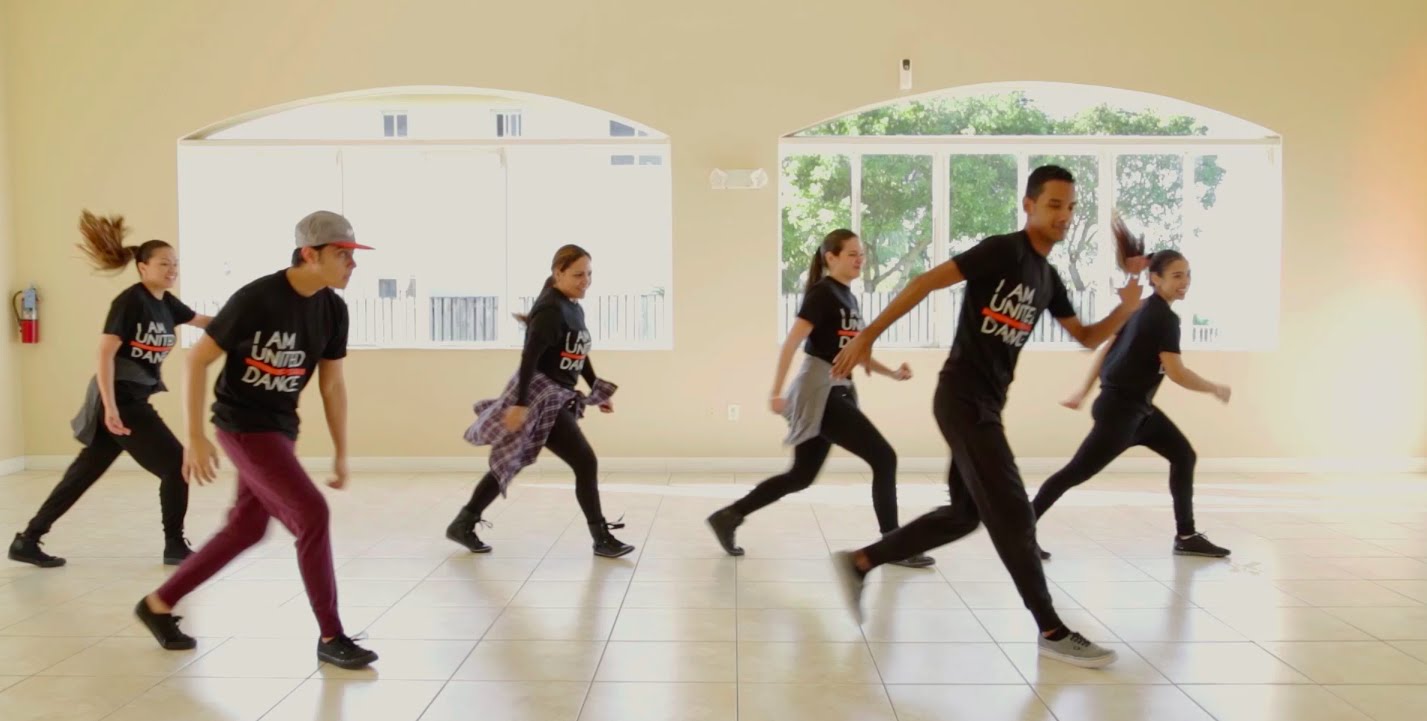
Find your partners and dance, dance, dance.

The combined effect of demands, disruptions and visionary examples from the outside with advocacy from inside can create the democratic force so lacking in our formal, largely broken, system of representation. Successful IOS demands the complementary use of both negotiations and dissent. This tactical diversity and flexibility aims to create a push/pull dynamic edging the power center toward a more desirable position.

The challenge is to encourage our wide cast of characters to imagine that they are all part of the same play. Imagine that. I am not defending the climbers in the movement that have capitulated to corporate rule, or accepted austerity, or war and the war on drugs. They have bowed out on their own.

Outside actors can better play their part by movement building and reaching new audiences. And by acting compassionately. The deeply internalized thought structures of racism, sexism, classism, denial and dominion that plague us are never finally resolved and best addressed by collective action not denunciation.

Some outside actors display such self-righteousness and doctrinaire purity, that propping up their radical identity steals the show and ignores their potential audience. Their soliloquy blinds them to the beauty of ensemble, playing with, and off of other actors rather than to some ideological or moral standard.

While major lip service is given to participatory democracy and social uprisings of the past, many in labor and social movement organizations and liberal establishment act as if they can skip the messy part and rely on lobbying, negotiations or voting alone. At worst participation is viewed as an unpredictable, expensive, or an unwanted strain in their relationships with power-holders.

Mostly, it’s just that encouraging member participation or movement building required long-term investments, and an often lacking eagerness to share power with emerging leaders. Instead, resources are poured into the safety of the inside game while organizing outside pressure is avoided, underworked, or viewed with suspicion.

But, we cannot dance well without partners, even if we do not find them attractive at first glance.

The IOS is a way for us to go beyond either/or approaches to discover the hidden connections and synergies between seemingly disparate movement activities and potential allies. Such an approach appreciates that a spontaneous division of labor exists: different roles aim for different goals with different means.

The IOS embraces the current variations as a signal that politics is occurring in productive ways along a continuum of possibilities.

IOS Organizers

The great organizer Ella Baker provocatively staked out the strategic high ground: “I never worked for an organization but for a cause.”(1)

IOS depends of the political skill of organizers that can work with many contradictions and tensions. The IOS organizer must master relationships through the art of dialogue and connection, showing the hidden links and synergies between people and ideas.

IOS organizers are liminal figures that straddle political thresholds and borderlines. We meditate the ever-present contradictions between interdependence and opposition by valuing and preserving each community’s differences and power while revealing the universal values and lessons contained in each and every contribution. Damn hard but we must do it,  because every communities contribution is a valuable resource that can, with some translation, be turned into supplies and assets for other freedom movements.

This is challenging work.

In this short guide on coalition building we can see the similarities between successful coalition work and the IOS. Coalitions amplify political power because they can mediate conflicts of interest among various constituencies. Coalitions can articulate a single voice on issues involving the whole community while preserving the distinctive qualities and the political power of the various member groups and constituencies.

As Ella Baker taught, “You’ve got to coalesce from a position of power, not just for the sake of saying ‘we’re together’.”(2) The power of coalitions grows to the degree that each group has its own political base. The power of coalitions flows from the age-old political logic that rulers must divide to conquer and that we must unite and coordinate our fragmented and scattered forces to win.

Coalition work is our best school for the IOS.


Next: Transformative Movement Culture:  To Win the Argument or Build the Movement?


1. Barbara Ransby, Ella Baker and the Black Freedom Movement, 209.

2. Ransby, 347.

Posted in Strategy | Tagged | 1 Comment

What is the Inside/Outside Strategy?

images-13

The first of three posts on the IOS. Find the complete essay on the Inside/Outside Strategy here. 

What is the Inside/Outside Strategy (IOS)?

The inside/outside strategy (IOS) is an approach to organizing and movement building that emphasizes learning from and coordination with resistance movements and political positions you do not completely agree with. By proposing a “both/and” rather than an “either/or” attitude toward ideas and tactics, the inside/outside strategy is a way to resolve the static binaries and false choices that divide us and waste our energies.  The IOS is an alternative to the endless polemic and fragmentation that characterizes the conventional left-wing pursuit of the “right line.” The inside/outside strategy is particularly useful in organizing mass movements, coalitions, big-tent political parties and revolutions.

The inside/outside strategy is a way to understand how the disparate currents of the labor and social movements could converge, making the whole greater than the sum of its parts. In particular, the IOS appreciates that negotiations with power holders are weak without direct pressure that disruptive actions bring to bear. Martin Luther King wrote:

”The purpose of our direct-action program is to create a situation so crisis-packed that it will inevitably open the door to negotiation.”

The IOS also attaches great importance to the deeply-rooted local projects that foreshadow  the day when the people regain independence through control over food, water, power, art and work. The IOS aims to build solidarity, discover synergies, and improve coordination through a more inclusive and comprehensive view of political activity.

The IOS shifts our attention to power: how power works and how we, the people, may one day govern ourselves.

The IOS depends on the creation of mass movements and alternative activities outside the centers of power that work in conjunction with clusters of interest — organized or individual supporters inside or along the periphery of the power structure. IOS is a strategic orientation that social movements and dissenters have historically used to influence society.*

Strategy is a means of empowerment; a plan or method for getting things done; a way of answering the question: How? Strategy is the planned use of tactics, an instrument of power and its design depends upon its goals.

Strategy is useful not only because we need a plan but also because it allows us to have a more revealing perspective than issues alone, a more useful vantage point from which to observe movement activity.

IOS can also provide a better understanding of how past movements gained power for marginalized groups. IOS can reveal the hidden synergies and deep connections behind what often appears as chaos and worthless conflict within the movement. We need to move beyond either/or choices to both/and agreements. In this way the IOS can help us learn from each other. What is more important than that?

Today, the IOS is applied as a conscious strategy most commonly to targeted campaigns seeking some defined goal. The Progressive Democrats of America and the environmental movement provide important recent examples of the IOS we will return to later. For the purposes of this blog however, we will explore what IOS might look like as an overall strategy in a movement for social transformation.

Outside

Since at least the early 20th century dissident or marginalized groups have employed pressure to reshape the established structures of power using a two-pronged approach. The “outside” movement becomes a home for activists to exchange information, develop strategy, publicize their agenda, plan protest and engage in the indispensable work of long-term organizing and movement building. Until we see movement building and the not-so-simple act of organizing as core activities we will never approach even the threshold of IOS.

In recent years the “Battle for Seattle,” the initial opposition to the Iraq War, Occupy, Ferguson and the struggle of minimum wage and contingent workers gave us a good glimpse of what an outside movement looks like. Protests and demonstrations understandably get our attention and draw media coverage but will remain limited and episodic unless based on organizing projects that empower people. At the heart of the movement is the most challenging work: the local economic, social and environmental projects that empowers people by disrupting and reconstructing power in lasting ways.

The “outside” comes in many forms: the organizing, mobilization, protest, disruption and revolt we typically think of as social movement activity.  Alternative economic activity or other community work we might think of as “prefigurative” is another increasingly important form of outside action. Prefigurative refers to projects that try to create ecological and social relationships, work settings, or democratic processes we need today and would like to see become commonplace in the future.

Prefigurative politics is a kind of direct action that circumvents power centers to establish a better world in “the here and now” without relying upon winning elections or passing legislation. Worker owned enterprise, food and energy co-ops and collectives, community gardens, individual or collectively owned solar power are good examples. Civic organizations of all kinds build and rebuild communities exploited by reckless corporations. Food, water and energy projects independent or partially off the grid, are all examples of outside politics. Detroit has become a national focal point for transformative community projects.

There is a growing fusion between prefigurative and social change activism. The struggle over GMOs and the global protests against Monsanto demonstrate what activism might increasingly look like. Judging by the history of the mid-20 century the fusion of social change models with prefigurative politics holds broad mass appeal and immense revolutionary potential.  Its messy, but that’s where the magic is.

For both social change and prefigurative projects real power lies in large-scale involvement, even if that involvement is local and seemingly dispersed. When tens of millions control their own work, water, power and food, or conduct civil disobedience and protest or contest public space or restore a sense of community then the outside will have the power to make inside work matter. According to some estimates tens of million of American already participate in some form of activism.

Inside

Perhaps the most effective position straddles the line between in and out. The dissident caucus, rank and file organization or working group has a rich history in the US.  Teamsters for a Democratic Union, fought what was one of the most corrupt unions in the country. The Dodge Revolutionary Union Movement (DRUM) aimed at the racist policies of the automakers and the failure of the UAW to champion the cause of black workers that were often the majority in auto plants. There were many such efforts started during the mid-20th century.

In recent time, women, people of color, youth, LGBTQ, contingent workers, immigrants, or political dissidents form caucuses and working groups to push their movements and organizations toward better politics, sometimes even capturing the leadership. Political efforts, like the Working Families Party, combines protest and organizing to prod from the left, usually in concert with the liberal Democrats, sometime in opposition to machine Democrats. The Labor Party hesitated to run its own candidates and ended up following Connecticut’s Legislative Electoral Action Program to attempt to organize a party within a party.

Where collective inside positions are absent the insider can work more informally. The inside position, properly played, is not that of a sell-out, careerist or token. Powerful appeals to career or straight-out discipline often succeed in pushing the insider to settle into business as usual. The inside role is incredibly difficult to play and one of the most damning limitations on the IOS — particularly in the absence of a credible and disruptive outside movement.

The insider position—be that inside of Congress, unions or interest and advocacy groups—requires risk and courage to be in or near the centers of power but to remain loyal, not to the machine, but to political project of transformative social change. Martin Luther King set the bar high with his three evils of racism, materialism/poverty and militarism. An insider that does not work toward the big changes has reduced the IOS to clever tactic. The insider with “eyes on the prize” works to funnel resources to the outside, legitimizes the mass movement’s work and articulates its vision. The effective insider does not try to control or limit protest but welcomes unruly activism as the best possible bargaining chip.

Risk to the insider’s position can be managed by successful organizing and close and regular association with the outside movement — movements that the power center often find necessary to pay lip service to if not actually serve. Progressive legislators, activists in advocacy organizations and progressive union leaders and staff are positioned to pick up the insider role.

Good luck.


*I want to thank Joe Berry for reintroducing me to the concept of the IOS in his book, “Reclaiming the Ivory Tower: Organizing Adjuncts to Change Higher Education“.Monthly Review Press, 2005
Posted in Strategy | Tagged , | 4 Comments