“Bernie or Bust” means Sanders or Green Party in 2016

eada55cc4423e917dc0c1adae0cefcf9


The “Bernie or Bust” Pledge may seem a dangerous game. Maybe so, but not nearly as dangerous as more of the same. We need to send a message to the machine bosses and more important: a message to ourselves.

“We the people” declare independence. Independence from the corporate power, endless war, the fossil fuel regime, mass incarceration, wealth inequality, corporate media and bottomless pit of the lesser of two evils.

Finally. It’s our time. No spoiler but our own failure to organize.

Sign for Sanders or Green Party in 2016.

Sign on if you care; share widely if you dare.


Posted in Uncategorized | 4 Comments

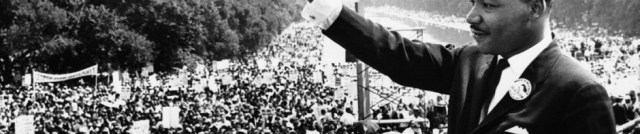
How Would Martin Luther King Vote in 2016?

kingphoto-940x198


“In addition to the development of genuinely independent and representative political leaders, we shall have to master the art of political alliances. Negroes should be natural allies of many white reform and independent political groups, yet they are commonly organized by old-line machine politicians. We will have to learn to refuse crumbs from the big-city machines and steadfastly demand a fair share of the loaf.

When the machine politicians demur, we must be prepared to act in unity and throw our support to such independent parties or reform wings of the major parties as are prepared to take our demands seriously and fight for them vigorously. This is political freedom; this is political maturity expressing our aroused and determined new spirit to be treated as equals in all aspects of life.”


Enough said?


[1]MLK Where do we Go from Here 607, The essential Writings and Speeches of Martin Luther King, ed. James M. Washington. See also Black Power Defined, 309

Posted in Uncategorized | 5 Comments

Both Interest And Ideals: Working Idealism In

Sixth in the Series: On Organizing

Idealis-Realism


Working Idealism In : Engage the People

Peace and economic justice is not something we need just for the workers of the Maquiladoras or the people of the Middle East: it is necessary to the well-being of the American people. The massive redistribution of wealth to the military-industrial complex  stunts every social program. And, war is more; its death and disability for millions including US veterans and their families. War is unprecedented Corporate Power and social control.

We still confront the interlocking systems of oppression and social control that Martin Luther King described as the giant triplets of Racism, Militarism, and Economic Exploitation.  It is in our interests to oppose white supremacy, war, mass incarceration and wealth inequality as a way to fulfill our ideals of peace, equality, and democracy.

Naomi KleinChristian Parenti and many others are persuasively making the connection between war and climate change. The US military is the single greatest consumer of fossil fuels. War will accelerate climate catastrophe. Neither is in the interest of the people and both can be framed in terms of broad ideals of human rights and environmental justice.

The Organizer has Interest in one hand; Ideals in the other.

Peace, climate change, universal health care and racial justice issues are admittedly very difficult areas to work in with union members long trained in the narrow self-interest typical of service unionism or worse, business unionism.1

It is not a coincidence that narrow self-interest, surrender to machine politics, and the failure of domestic and international solidarity all occurred in an environment where organizing was devalued or simply not practiced.

On the one hand union members will always express different political opinions and controversy cannot be avoided. On the other leaders create barriers to membership and activism if official opinion strays too far from that of the rank and file or if external political matters are seen by members as a distraction from union’s core mission.

It is generally unwise to alienate members for the sake of high sounding but ineffectual resolutions no matter how noble the cause. Political stands arrived at without thorough discussion, explanation and the opportunity for dissent can backfire. Better to take on one or two issues and vet them well rather than pass dozens of unanimous resolutions through an executive committee.

Members will be more willing to listen to the controversial views of their leaders if they feel the union is listening to them. Are they engaged by co-workers or shop stewards? Have they been contacted by staff members? Are they served well by the contract?

Solidarity is learned in practice, by example, at home. Exhortation will not work. Long term education will. Workshops and seminars matter but it will take a multitude of the quiet conversations that are the foundations of organizing.

Self-interest, enlightened self-interest, and universal values are not necessarily stages of development that progress from one to the next. It is useful to introduce ideals and values from the outset given that your constituency has already assented to them in theory. You will draw power to your organization if you connect your day-to-day struggles with dignity, fairness, justice, freedom, peace, democracy and the health and wholeness of mother earth.

 For Example: We Will have Democracy at Work or Nowhere.

The workplace is the last frontier of American freedom. We have a very rich challenge ahead. The Bill of Rights stops at the workplace door. Although we spend most of our waking hours at work, it is where we are least free. Arguably, Americans are the least free people at work in the developed world. Why should political rights at work be so limited when it is obvious that the corporations are free to have boundless influence in our government and public life?

The intervention of private corporations in government has blurred the distinction between public political power and private economic power to the point where the two are inextricably connected. The lack of democracy in the economy has made the attainment of democracy in public sphere unlikely. If corporations enjoy the full rights of citizens in the political sphere should workers not enjoy the full rights of citizens in the economic sphere? Democracy depends on the hope that someday the Bill of Rights will be respected in the American workplace.2

The job of the organizer then is to articulate the connections between job security, low pay, favoritism, divide and conquer, or other bad managerial practices, to democracy and the other values we claim to cherish. This is particularly important in the recruitment and development of leaders and organizers. Ideals will provide a sustaining spirit for the union.

Organizers draw strength and endure the trials and minutiae of their work knowing that the specific and particular is the form in which the universal ideals like democracy reveal themselves. Your daily work may be to shore up the grievance procedure but you are really working on due process protections for democracy at work. Decent compensation frees people from survival concerns and allows them to realize their potential as citizens and humans.

Organizers blast through what may seem tedious details regarding small matters because they know that the struggle for freedom is found in the details of life. The details are the only place universal values are ever found–even in love or literature


1.Moody, Kim. An Injury to All: The Decline of American Unionism, San Francisco, CA, & Chelsea, MI: Verso, 1988.

2.For more See Richard Moser, “Organizing the New Faculty Majority, pp. 103-108


Posted in American Culture, Movement Culture, Organizing Method, Organizing Strategy, revolutionary strategy, Strategy, Uncategorized | Tagged , , , | Leave a comment

Labor and the Cold War: The Epic Fail

Fifth in the series: The Principles of Organzing

backwardsgun


Cold War Liberalism

During the Cold War, Labor unions violated their own sacred principle of solidarity by joining with imperial elites and corporate interests to weaken militant trade unionism abroad — usually under the mantle of anti-communism. By undermining unions, AFL-CIO foreign policy helped corporations exercise global control and contributed its share to the availability of cheap labor abroad. That cheap labor then became a central ingredient in outsourcing, plant closing, wage suppression, and the loss of jobs at the heart of labor’s current decline.

This support for empire was sometimes called “Cold War Liberalism” because many liberals, progressives, even some radicals joined the anti-communist crusade. 

Labor’s own eager cooperation with the Cold War agenda undermined our unions and our way of life at home. That was the price we all paid so union officials could be “team-players” and reap the illusory benefits of the machine: status, minor concessions and patronage positions in city, state and national machines.

The domestic counterpart of the Cold War was the mid-century social contract, also called the labor-capital accord. The truly national mobilization during WWII opened new vistas for workers, women, and minorities both racial and sexual. An unprecedented feeling of national unity was momentarily forged and rising expectations fueled the emerging labor and social movements. 

This contradictory combination of fighting for workers during good times on one hand, while supporting the empire’s war against communism on the other allowed Cold War liberals to maintain their liberal image and radical criticism while collaborating with the ruling class. 

The Mid-Century Social Contract

In the wake of W.W.II, America’s unrivaled economic and political power allowed most Americans to enjoy a remarkable period of economic opportunity. Government promoted and sustained economic growth through a vast array of Keynesian spending programs including investment in higher education. As the GI Bill  opened the door to everyday people, higher education underwrote the scientific, technical, and theoretical knowledge necessary for post war economic activity. Business and administrative leaders upheld their end of the bargain by agreeing to a rising standard of living for most working people that included such protections as pensions, medical benefits, job security and meaningful minimum standards set by law.1

Unions were reluctantly tolerated as long as labor officials agreed to management’s right to be the sole authority governing business.

Both the limits and benefits of the mid-century social contract were formalized first by the 1947 Taft-Hartley Act which was supported by Democrats who joined with Republicans to override Truman’s veto of what he called the “slave labor act.” The other pillar of the deal between labor and capital was the 1950 UAW contact remembered as the “Treaty of Detroit.”2.  Taft-Hartley purged radicals, stripped unions of powerful tactics and promoted “right to work” laws, while the Treaty of Detroit set the pattern for increased material benefits for millions of workers.

The benefits of the 1950 UAW contract was the result of years of rank and file power. Such power, dependent on organizing and activism, is always insecure and could in no way be guaranteed by deals at the top.  Taft-Hartley Needless to say, the Treaty of Detroit has been “repealed” while Taft-Hartley is all too alive and well.

At that key moment in US history, labor made an admittedly tough but fateful compromise and chose to pursue private welfare plans rather than commit to the struggle for universal health care,   such as that proposed by Truman in 1945.

Special benefits may have temporarily functioned to motivate workers to join unions but once the peak of prosperity passed by the mid-70s, “exclusivity” backfired and encouraged resentment among unorganized workers making then open to anti-union appeals. Exclusive union welfare plans yielded decisive ground in US political culture: health care or pensions became private matters for “member’s only” not political rights for all.

Be it Cold War liberalism or mid-century social contract, Labor’s political perimeter was set and policed by the Democratic Party.  And, this is nothing new. Since the days of Tammany Hall in the 19th Century, big city machines have corralled first Irish-Americans  then African-Americans and many others since. The bribe: swap narrow self-interest in the form of racial, status, organizational or class privilege — even the most pathetic and temporary forms of  patronage and concessions — for freedom, equality and democracy.

Quite a bargain for the Corporate Empire. As the New Cold War (and the hot wars it provokes) intensified we can expect to see the reemergence of Cold War Liberalism.


Next: Working Idealism In


  1. For more on the mid-century social contract see David Brody, Workers in Industrial America: Essays o the Twentieth Retry, Oxford University Oress 1980 Chapters 5 and 6; Barry and Irving Bluestone, Negotiating the Future: A Labor Perspective on American Business, Basic Books, 1992, Chapter 2; Nelson Lichtenstein and Stephen Meyer, On the Line: Essays in the History of Auto Work, University of Illinois Press 1989, pp. 1-16; Kevin Boyle, The UAW and the Heyday of American Liberalism, 1945-1968, Cornell, 1995.  For more see p. 109 Endnote #3, in Richard Moser, “Organizing the New Faculty Majority” in Equality for Contingent Faculty: Overcoming the Two-Tier System,Keith Hoeller editor, Vanderbilt Press, 2014.
  2. Nelson Lichtenstein, The Most Dangerous Man In Detroit: Walther Reuther and the Fate of American Labor, New York: Basic Books.

Posted in American Culture, Capitalism, Empire, History, Labor Movement, Movement Culture, Organizing Method, Organizing Strategy, Red Scare, Uncategorized, union organzing, unions, War | Tagged , , , | 1 Comment

On Organizing: Both Interest And Ideals

image655621

Fourth in the series: On Organizing

Both Interests And Ideals

Organizers usually accept the idea that self-interest is the best starting point for empowerment.  Unions are predicated on serving the interest of working people. Social movements too advocate the peoples’ many interests.  Yet self-interest is never enough.  If  the labor and social movements are to inspire people to great things, organizers must help people connect matters of immediate self-interest to enlightened self-interest, and ultimately with the great ideals of freedom, democracy, equality and justice.

History would suggest that social movements attain the potential for dramatic growth and social transformation only if they are able to convincingly connect self-interest with ideals and universal values. 

Self Starters

Self interest is an important starting point because it is a generally accepted value within modern commercial culture and firmly grounds a person in the reality of the issues. A person with self-interest is much more likely to know the nuances and subtleties of the issue, and be more engaged for the long run, if more guarded about taking risks.

Fighting your own battles is a potentially transformative experience in ways that advocating for others rarely is.

Self-interested struggles come with considerable risks and convene an inner dialogue testing and extending the limits of courage, understanding and commitment. The workplace is a hostile environment where interests clash. Pursuing self-interest (given that its through collective means) is usually more difficult than fighting for ideals or the well-being of others although those are noble pursuits as well.

Self-interested struggles are incomparable learning experiences because the direct experience of risk and exposure to power reveals the discord between claims about freedom and democracy and hard reality of the unfree workplace. Deeply felt dissonance is an effective way to revise peoples established view of the world and makes possible the transformation of deferential workers or dues-payers into activists and citizens. Successful efforts also reveal the boss to be less than omnipotent and the people more capable than previously imagined.

Activists who have not taken the risks or had the experience of organizing their own workplaces or communities sometime in their lives will have difficultly understanding the people they are trying to organize no matter how good their education nor how radical their ideology.

Despite the value of self-interested efforts, the underlying theories of “economic man” (that people react rationally and logically to their class or economic interest) have been proven utterly bankrupt. If interests dictated behavior than how does one explain that millions of working class people, including millions of union members, vote for the Republican Party?

The Seeds of Solidarity

Good organizers seek to broaden self-interest into a community of interest by linking — first rhetorically then in organizing — the agendas of different constituencies. Enlightened self-interest is the pre-condition behind the cohesive relationships we commonly call solidarity. Enlightened self-interest exists when people realize that they must help others to help themselves. Solidarity begins when people understand that their job security will always be threatened unless everyone at work enjoys it. Solidarity grows when people realize that job security is a principle that should be universally applied not only because it could make them more secure but because it serves the public interest by introducing democratic practices into the workplace.

Since almost all workplaces are fractured by race, gender, age, sexuality and class (meaning either rank or occupational differences or multi-tiered labor arrangements), internal conflicts of interest abound. Every work force or community can be divided. Conflicts of interest are most apparent in the immediate and short-term issues such as the distribution of scarce resources. A community of interest is more apparent in long-term interests reflected in issues surrounding workplace democracy, job security or quality of work. To promote solidarity, the organizer should connect each campaign to the long-term interest of the whole work force, wider community, working-class or “the people”. Needless to say this is a long-term project.

On the day-to-day basis this take the form of resisting zero-sum approaches imposed by management that attempts to shift costs and risks between different groups of workers favoring one group then the other in an endless game of divide and conquer. Political favors to one group can become the basis for a setback for the wider community or workforce.

Employers and other elites rule not through bare-knuckle domination alone but by offering advantages to certain segments of the workforce. They count on our complicity. But, enlightened self-interest can help us see that some gifts can be detrimental to our shared long-term interests. The idea that a union’s mission is to always get the best deal for its members–no matter what–is all too common and easily plays into divide and conquer strategies.

Enlightened self-interest can bridge larger political efforts that need to evoke universal values to succeed. It is now obvious that no union-negotiated healthcare benefit in the United States is secure, because we do not have universal healthcare. The attack on private pensions systems and the weakening of social security are part of the same process of shifting costs away from corporations onto everyday people. Struggling for universal benefits is not just an altruistic luxury. Part of the current failure of US labor to satisfy the self-interested demands of members is a product of the historic collapse of enlightened self-interest.


Next: Interest and Ideals Continued


Posted in American Culture, Movement Culture, Organizing Strategy, revolutionary strategy, Strategy, Uncategorized | Tagged , , , | Leave a comment

Wake Up Zombie, Kick Up a Big Stink!

th-4

I have invited Patrick Walker of Revolt Against Plutocracy (RAP) to be a guest blogger. Walker and his fellow political revolutionaries at RAP are a leading force in the grassroots Sanders surge. Best of all they have a strategy. Check out and sign the “Bernie or Bust” Pledge.

This is Part 3—the call-to-arms finale of the series.

Wake Up Zombie, Kick Up a Big Stink!

Final Warning: The THUGS Are Taking Over

Recognize this article’s title? Then you’re probably a rabid Elvis Costello fan. The title’s a line from one of my favorite obscure Costello songs, his quirky apocalyptic vision “Hurry Down Doomsday (The Bugs Are Taking Over).” But Costello’s line couldn’t be more politically pertinent, not just for his fans, but for climate activists and progressives and—dangerously unbeknownst to itself—for all of humanity.

Just as the average, blissfully unaware “zombie” of Costello’s song must awake to the fact of a “giant insect mutation” that threatens human extinction, so climate activists—and progressives generally—must awake to the dangers of a bullying, anti-democratic Clinton machine that, by imposing on us Clinton’s lethal “all of the above” energy policy heavy on fracking and her militaristic foreign policy that makes peace and global climate cooperation unthinkable, ultimately may threaten that same extinction.

Given the bullying nature of Clinton’s electoral machine, perhaps we should retitle Costello’s song “Hurry Down Doomsday (The THUGS Are Taking Over).” In Part 2 of this series, I framed that political thuggery as the appearance of a new, far more sinister Tammany Hall, with both Clintons, Hillary and Bill, combining to play the backstage role of a vastly more powerful Boss Tweed—a Boss Tweed with global political and donor connections. In that Part 2 article, by emphasizing the hiddenness of that new Tammany Hall—a hiddenness due to the irresponsibility of deeply corrupt mainstream media that has made itself part of the Clinton political machine—I probably shortchanged my actual case for the climate-threatening thuggery of the Clintons’ new Tammany Hall.

The Clinton machine’s thuggery consists of two parts: (1) shoving down our throats a candidate (Hillary Clinton) with demonstrably bad character and policy and (2) shoving her down our throats, like all other political machines, by radically assaulting, informed consent of the governed—in other words, trampling democracy itself.

The Clinton machine—in reality, a conspiracy of Big Money interests, mainstream media conglomerates, the Democratic Party leadership, and Democratic politicians, union leaders, and environmental organizations bought off or intimidated by the Clintons and their Big Money interests—works incessantly to paint a deceptively rosy picture of Hillary Clinton and to censor from voters the many damning things they need to know about her to make an informed presidential choice.

For, without the Clinton machine’s vast efforts at censorship and propaganda—and backroom intimidation of progressive opinion leaders with no rational grounds for supporting her—Democratic primary voters would almost certainly choose Bernie Sanders for president. The Clinton machine’s political thuggery amounts to an overthrow of democracy when, in the face of imminent climate catastrophe, humanity needs democratic governance most.

Consider, for example, the cases of unions and environmental organizations that—contrary to rational evidence and the wishes of their members or supporters—have endorsed Hillary Clinton. John Atcheson’s splendid Common Dreams article makes that case far better than I have space to here. But in citing Atcheson’s article as my evidence for the anti-democratic, pro-Clinton behavior of unions and environmental groups, I wish to note two important things. First is Atcheson’s statement about those two sorts of organizations: “Now they’ve joined the press, the political parties, and government as tools of the oligarchy.” This point is important, since these players are precisely the ones I identify as parts of the conspiracy I call “the Clinton machine.”

Second is his detailed spelling out of how, from the viewpoints of both union members and environmental organization supporters, endorsement of Hillary Clinton is simply irrational: the influence of Big Money has simply overruled the rational reflection based on member interests and the common good that should—and used to—motive such organizations. Such endorsements are based on paper-thin rationales fabricated by propagandists—or, what amounts to the same thing—by bought-off organizational leaders seeking to rationalize their own unjustifiable support for Clinton. It shouldn’t surprise us that Atcheson blows always such flimsy, transparent rationalizations like so much chaff in a tornado. This flimsy rationalization—this shoddy reasoning to cover corrupt, irrational action—will play a crucial role in my castigation of supposedly “progressive” Democratic politicians for endorsing Clinton rather than Sanders. As it will in publicly shaming and challenging those “progressives” for their irrational, unmerited endorsements—a crucial part of the revolt strategy I outline here.

Quite clearly, it’s the backroom power of the Clintons, with their enormous support from global Big Money interests, that lets them (by threatening use of that money to harm electoral prospects) intimidate any progressives who might follow rational progressive principle and endorse Bernie Sanders. In the circumstances, Congressmen Raul Grijalva and Keith Ellison’s endorsements of Bernie look like moral heroism, though perhaps they’re partially explained by a popularity with constituents that debars the Clinton money machine from “getting” them. Perhaps the best progressives can generally hope for is the cowardly political fence-sitting of Elizabeth Warren or Alan Grayson—itself vastly preferable to Al Franken’s, Sherrod Brown’s, or Bill De Blasio’s lickspittle endorsements of Clinton.

Because, for a rational progressive politician seeking the best interests of progressive constituents, there is no defensible reason under the sun for endorsing flip-flopping “convenience progressive” Hillary Clinton rather than staunch, principled progressive Bernie Sanders. Since this is my chief argument for a revolt against Democrats that gets up in spineless progressives’ faces, let’s examine briefly it in detail.

Hillary Treats Progressives as “Fucking Retarded”

For a brief, compelling summary of the virtually irrefutable case why Hillary Clinton is no progressive, read here, here, and here. But besides offering a solid repository of evidence supporting the claim that no progressive can rationally endorse Clinton, I’d like to dramatize my appeal by making my own case on a “What have you done for me lately?” basis. That way, no one can conceivably conclude—at least not on rational grounds—that political snake Clinton has recently molted, replacing her repulsive opportunist skin with a shiny progressive one.

The key word here is opportunist, a term that insightfully pinpoints the nature of the Clintons—and indeed, the whole approach of the “Third Way” Democrats who now dominate the party and whom the Clintons played a central role in bringing into being. Whatever pols like the Clintons say to progressives, the underlying “prime directive” is to keep the geyser of money from Wall Street and other well-heeled interests flowing; needless to say, this agenda is accompanied by more than a dash of cynicism and contempt toward the progressives whom one must appease with lip service—a contempt brutally expressed by former Obama chief of staff Rahm Emanuel when he called progressives “fucking retarded.

Now that Clinton seems confident her machine has strong-armed enough endorsements and superdelegates to assure her the election, her every action seems vivid proof of how strongly she agrees with Emanuel.

Remember now, this is a woman who recently declared, in the October 16 presidential debate, “I don’t take a backseat to anyone when it comes to progressive experience and progressive commitment.” Evidently, she thinks we as progressives are so “fucking retarded” that we won’t remember—or that we simply don’t have a clue what progressive policies are. We should have seen the progressive mask dropping when Clinton shortly thereafter refused to lobby against TPP. Beyond being objectionable to progressives of every stripe, this treaty is disastrous for effective climate action, allowing fossil fuel corporations to sue all governments whose responsible efforts to curtail carbon emissions negatively impact their profits.

Real progressives like Sanders and Warren treat defeating TPP as a matter of life and death; isn’t Clinton, in showing no progressive commitment to this battle, definitely “taking a backseat”?

After that nonchalant betrayal of progressives’ most vital interests, Clinton only added insult to injury. Consider this superb article by Steven Rosenfeld, mainly about her open return to being the hawk she’s always been, but also cataloguing her overall turn to the right since her progressive-suckering remarks at the first Democratic debate. As Rosenfeld rightly notes, Clinton since then has (1) defended her corrupting Wall Street donations and speaking fees (shamelessly invoking the sacred tragedy of 9/11 in her defense), (2) bashed Bernie Sanders’ progressive-beloved proposal for single-payer health care, (3) called for more aggressive military interventions in Syria, and (4) proposed new middle-class tax cuts (presumably tied to cuts in domestic programs benefitting the middle-class and poor).

And as the cherry on Clinton’s right-wing sundae (that’s how it must have tasted to her after the castor oil of having to claim she was progressive), Rosenfeld discusses Clinton’s overtly hawkish speech at the Council on Foreign Relations, contrasting it with Sanders’ express desire not to inject our nation into wars “over the soul of Islam.” While Rosenfeld is correct in stressing that Clinton has always been an interventionist, he simply doesn’t go far enough in stressing the danger she poses our nation.

For that purpose I prefer Andrew Levine’s CounterPunch article “The Real Trouble with Bernie,” which, based on the assumption that Sanders is certain to lose, rebukes his irresponsibility in not emphatically calling out Clinton on what a peril to our nation her hawkishness is. As Levine puts it, “as President, Hillary will be a modern day Annie Oakley, but with nuclear weapons, not six shooters. It is a frightening prospect.”

I agree that it’s a very frightening prospect, worsened by a factor Levine doesn’t note: how crucial global peace, as opposed to endless war, is as a precondition for addressing climate change. Beyond the Lusaka Declaration I cited early in his article, Naomi Klein makes global peace an essential part of her climate justice agenda, for how can a world endlessly at war command the gargantuan resources and unprecedented cooperation humanity needs to defeat the climate enemy? It simply can’t, which makes Clinton a double “epic fail” in terms of Klein’s climate justice agenda: for her corrupting ties to fossil fuel interests and for an inveterate militarism that itself wastes fossil fuels and annihilates any hope of climate cooperation rooted in global peace. It’s with superb reason that I’ve branded Clinton “Naomi Klein’s anti-matter.”

How We “Kick Up a Big Stink”

What the reams of evidence just presented mean to show is that, with Hillary Clinton such a clear and present danger to humanity, and with progressive politicians having no rational grounds for supporting Clinton—no defensible justification rooted in the common good—their endorsement of her is not merely cowardly but villainous. Every so-called “progressive” pol who endorses Clinton becomes a willing tool of the Clinton machine and its assault on democracy—spreading the lying message that “Madam President” is hunky-dory in progressive terms when in fact our backstabbing enemy.

Acknowledging the cowardly treachery of endorsers who’ve joined the Clinton machine dictates a simple strategy to climate activists and progressives: we must wake up from being zombies (about progressives having any real voice in Clinton’s Democratic Party) and “kick up a big stink” (by publicly rebuking Clinton-endorsing progressives for driving us out of the party). Specifically, we must warn them that we, as conscience-driven climate activists and progressives, reject their craven endorsement of Clinton rather than Sanders and will categorically refuse our votes to her if she’s the Democratic nominee.

Indeed, we should warn them that their indefensible endorsement of Clinton is driving progressives in droves from the Democratic Party—a warning we should affirm by pledging to vote for Green Party candidate Jill Stein if Clinton’s nominated.

So essentially, our “kicking up a big stink” has two parts: (1) signing Revolt Against Plutocracy’s (RAP’s) Bernie or Bust pledge and (2) joining in a public shaming campaign against so-called “progressives” who’ve endorsed Hillary Clinton, upbraiding them for an irrational choice that tells climate activists and progressives that we’re utterly unwelcome in a Democratic Party clearly owned by Hillary Clinton.

Why the Bernie or Bust pledge? Because, with limited precious time left before the primaries, it already has 25,000+ signers—far more than any similar pledge, created from scratch, is likely to generate. What’s more, it already has a dedicated staff—Revolt Against Plutocracy’s leadership and volunteers—tirelessly promoting it. As an effective tool of revolt against the Clintons’ undemocratic de facto purging of progressive voices from the “Democratic” Party, nothing better is anywhere in sight.

But what about the wording of the pledge, which mentions writing in Sanders and not voting Green if Clinton’s nominated? Well, RAP’s pledge did start out that way (citing voting Green as the best option in states that don’t allow write-ins, but lately, in light of Democrats’ hard-heartedness in not endorsing Sanders, we’ve been opening up toward a more radical “Greener” interpretation of the pledge.

As a co-founder of RAP, I fully intend to vote for Jill Stein if Bernie’s not nominated, and also to lobby for a “Greener” wording of the Bernie or Bust pledge. But it’s perfectly fine if pledge signers “agree to disagree” on how they’ll vote if Clinton’s nominated; the point is to make a powerful, united protest against her tyrannical exclusion of progressives from representation in the U.S. government. I simply think that voting Green—voting for a splendidly progressive party unjustly excluded by Democrats’ dirty tricks from ready ballot access—is the most forceful protest against Clinton’s purging of progressives. If Third Way Democrats fear anything more than Bernie, it’s the rapid growth of a Green Party alternative.

Clearly, the logic of Naomi Klein’s climate justice vision dictates that we elect a progressive president and Congress ASAP—humanity’s very survival may depend on it. Bernie Sanders has already declared what he would do as a progressive president faced with a Republican Congress: he would use his bully pulpit to rally his supporters and denounce Republican in terms of his wildly popular progressive agenda—an agenda that already has him beating front-running Republicans by wider margins than Clinton.

Seeing how much a Republican Congress would favor Clinton’s militarist, fossil-fuel-friendly, pro-Wall Street agenda, can anyone picture Hillary Clinton doing that? She’d almost certainly excuse her “reach across the aisle” by a “spirit of bipartisanship” and a “pragmatism that gets things done.” When the things getting done are endless war and warming of the climate beyond recognition, climate activists and progressives must revolt against Clinton’s tyrannical domination of the Democratic Party. If it doesn’t soon become Bernie Sanders’ party, we must leave it.

Please sign the Bernie or Bust pledge—our most forceful tool for sending that message.
Posted in Electoral Strategy for 2016, Movement Culture, revolutionary strategy, Strategy, Uncategorized | Tagged , | Leave a comment

Clinton’s Updated Tammany Hall — Destroying Democracy and Climate Too

climate-justice

I have invited Patrick Walker of Revolt Against Plutocracy (RAP) to be a guest blogger. Walker and his fellow political revolutionaries at RAP are a leading force in the grassroots Sanders surge. Best of all they have a strategy. Check out and sign the “Bernie or Bust Pledge.  This is the second post in a three part series.

Clinton’s Updated Tammany Hall—Destroying Democracy AND Climate Too

History does repeat itself, but never in quite the same way. So dirty machine politics, a historical “fossil” most associated in U.S. history with the “bad old days” of Tammany Hall and its notorious Boss Tweed, has doubtless had “evolutionary” ancestors in ancient Athens or Rome, and has contemporary relevance because the Chicago political machine, most associated with Mayor Richard Daley, had a formative influence on the political career of longtime Chicago-dweller Barack Obama.
Well, as far as history goes, it has repeated itself, but in a way sinister beyond imagining; it’s as if dinosaurs—utterly dominant in sheer physical prowess—had acquired an evolutionary trick that made them masters over humanity: they had learned to control human minds. As Hitler and his most dangerous henchman Joseph Goebbels diabolically realized, modern mass media provide by far the most effective means of controlling human minds, corroborating the sheer political genius of philosopher David Hume (as explained by fellow genius Noam Chomsky), who irrefutably explained how tiny minorities control majorities (often against their self-interest): by controlling popular opinion. To which the Hillary Clinton political machine is using to such effective extent that it might induce the human race, against its obvious self-interest, to commit collective suicide by electing fossil fuel maven Hillary Clinton.

Combining Chomsky’s scintillating insight (standing on the shoulders of “giant” Hume) and the historical story of Tammany Hall provides the ultimate insight into our own (potentially apocalyptic) times. Consider the following quotation from Robert McNamara’s historical essay on Tammany Hall I just cited: “Neighborhood toughs would be employed to make sure the vote ‘went Tammany’s way.’ There are myriad stories about Tammany workers stuffing ballot boxes and engaging in flagrant election fraud.” Contrast this with Chomsky’s—unimaginably presently relevant—citation of Hume: “Hume was intrigued by ‘the easiness with which the many are governed by the few, the implicit submission with which men resign’ their fate to their rulers. This he found surprising, because ‘force is always on the side of the governed.’”

In short, Clinton new Tammany Hall—a political “dinosaur,” but on a national rather than merely urban scale and backed by unprecedented billions of dollars—uses its modern, Goebbels-inspired propaganda machine to shove down the majority’s throats a candidate who (utterly hostile to their own professed desire to take effective action on climate) represents the interests of fossil-fuel industry predators on humanity’s future.

In this new, vastly more sinister Tammany Hall, it’s the globally connected “Bilderbergs” Hillary and Bill Clinton themselves who play the role of Boss Tweed, the “puppet master” of the whole show. By contrast, DNC chairwoman Debbie Wasserman-Shultz, so insightfully stigmatized as “Little Debbie,” is an expendable tool of the omnipotent Clinton machine—Hillary’s simultaneous “henchwoman” and laughingstock.

So why isn’t this story major news?

Evildoers Hiding in Plain Sight: Why WE Must “Be the Media”

“Hiding in plain sight”—probably our nation’s most important political slogan—was popularized by its most important recent political article, Mike Lofgren’s “Anatomy of the Deep State,” now being lengthened into a likely bombshell book. The Deep State, the combo of entrenched bureaucracies and corporate interests that serves as an unaccountable “shadow government” dominating our visible one, is far too big a topic to address here. Except to note that Hillary Clinton, the cutting edge of all status quo corruption, is its lifelong indentured servant, as I’m sure Lofgren, clearly no fan of Clinton’s “smart power,” would affirm. But what we need to focus on is the slogan “hiding in plain sight,” which supplies trenchant insight into our radically broken political system and relates intimately to my emphatic all-caps use of the word “HIDDEN” in my series title.

In the present case, what’s “hiding in plain sight” is Hillary Clinton’s dirty Tammany Hall machine—in an important sense, not hidden at all, but like the proverbial “emperor’s new clothes,” successfully escaping discussion through a widespread, profit- or fear-based conspiracy not to talk about it. A conspiracy, moreover, that annuls all hope of desperately needed intelligent political analysis, since the one real cause in so many repulsive political developments—the Clinton political machine—is simply banned by widespread conspiracy from discussion. And, since mainstream plays a central role in the “widespread conspiracy,” the slogan “hiding in plain sight” is intimately tied to another deeply insightful current political slogan: “Be the media.”

In short, since mainstream media, owned by an ever-smaller number of corporate conglomerates, has abdicated its responsibility to inform a free citizenry—letting dangerously mutated dinosaurs like Clinton’s Tammany Hall hide in plain sight—alert, informed citizens bear the responsibility to “be the media,” shining on those unnamed horrors the revealing (and damning) spotlight they deserve.

While we’re dealing in slogans, another important one for me is “reinventing the wheel,” something I resolutely refuse to do here. So, in fulfilling my citizen’s obligation to “be the media,” I won’t waste readers’ time by redoing work two fellow “citizen journalists” have already done brilliantly: illustrating with well-documented examples how the corporate-financed Clinton political machine, working through the DNC (technically the Democratic National Committee but better called “Democratic Nasties for Clinton), has relentlessly subverted democracy and undermined Bernie Sanders to achieve its climate-destroying goal of electing Hillary Clinton.

For that purpose, I refer readers to Michael Blecher’s deservedly smash-hit article “Why Are Bernie Sanders Fans So Angry,” a virtual lawyer’s brief meticulously documenting the dirty tricks Clinton’s political machine (based in both the DNC and corporate-owned mainstream media) has unfairly used to squelch any chance Bernie Sanders has of winning the Democratic nomination. And also to Sane Progressive’s hard-hitting video (by far the best she’s made), which comprehensively covers the new ground Michael Belcher missed, simply since his article appeared before the second Democratic presidential debate.
Any contribution I make as a citizen journalist is here confined to commentary: analyzing how the urgency for humanity of the climate issue portrays the anti-democratic Clinton machine dirty tricks Blecher and Sane Progressive ably document in a far more sinister light.

Consider, for example, Blecher’s correct assertion that “many in labor should also feel betrayed by the Democratic Party as they endorsed NAFTA and now TPP” combined with his equally correct later identification of environmentalists as among “many factions in the Democratic Party [who] have a right to be angry.” In environmentalists’ case, as regards TPP, boy, do we! Not only with the Democratic Party, but primarily with Hillary Clinton, who by all evidence is one of our gravest betrayers. I’ve already cited a Guardian video portraying the TPP issue as one of Clinton’s most shameless flip-flops. But, adding insult to injury, Clinton’s betrayal on TPP extends far beyond endlessly repeated cheerleading for a blatantly climate-destructive treaty, followed by a politically convenient, insincere flip-flop. In an arrogantly crass attempt to hide in plain sight—Clinton just assumes climate rubes can be hoodwinked—she instantly undermined all potential value to her “evolution” on TPP by stating she wouldn’t lobby against the treaty she claimed to oppose. Compare this to the actions of real TPP opponents like Elizabeth Warren and (most relevantly) Bernie Sanders, who ferociously lobby against TPP as if it’s a matter of life and death.

Granted, Clinton, unlike Warren and Sanders, is no longer a U.S. Senator, but as the globally connected odds-on favorite to win the Democratic presidential nomination and as an obviously potent power broker in the Democratic Party (how else could she quash Sanders’ presidential prospects?), it seems self-evident Clinton could squelch TPP by lifting her little pinky—something she brazenly admits she’s unwilling to do. Climate change hypocrisy, anyone?

And matters only get worse. Consider another important Blecher point: that renowned anti-corruption activist Lawrence Lessig was “for incomprehensible reasons” denied participation in the second Democratic debate. Differing just this once from Blecher, I find the reasons the DNC at the last minute change its criteria to deny Lessig access all too comprehensible. Quite simply, Clinton is the poster girl for the types of political corruption by Big Money Lessig staunchly opposes and would melt on contact with Lessig like the Wicked Witch of the West melted when doused with water. And alarmingly, not just the type of “cozy relationship” corruption Lessig rightly castigates despite the Supreme Court ruling otherwise, but going beyond the pale, the shameless quid-pro-quo corruption even our corporatist Supreme Court condemned.

In the first case—a climate-relevant one—consider Secretary of State Clinton’s global cheerleading for fracking while the brother of her advisor John Podesta was a fracking industry lobbyist. In the latter, more alarming case (not, mercifully, climate-related), consider Secretary Clinton’s shocking quid-pro-quo approval of arms sales—to nations well-known for human rights’ violations—right after those nations donated to the Clinton Foundation.

In short, Hillary Clinton, even putting climate aside, is simply too corrupt to be president, especially in a nation where legal experts like Lessig, or renowned sociologists like Benjamin Page and Martin Gilens, have rigorously confirmed that corruption by money is our nation’s gravest besetting political ill, part and parcel of a global ailment powerfully diagnosed by superstar economist Thomas Piketty.

And never is the political reign of oligarchy money and influence more sinister than when that money comes from fossil fuel interests—a point at the core of Naomi Klein’s climate-justice vision. Indeed, in Klein’s climate justice terms, Clinton is an “epic fail”: a failure not just in her acceptance of campaign money from fossil fuel interests but in her agenda on other non-climate issues—a militaristic, corporate-friendly, undemocratic agenda starkly opposed to Klein’s vision of the prerequisites essential to securing global cooperation needed to combat climate change. To such an extent that Clinton is best viewed as Naomi Klein’s anti-matter—or kryptonite.

As to Sane Progressive’s incredible citizen reporting, all I can add is the climate sleaziness of mainstream media coverage, combined with my interpretation of this as a new, deeply sinister Tammany Hall. And if I fully endorse Noam Chomsky’s interpretation of this as the substitution of manipulated popular opinion for force, I do wish to emphasize that it is a type of force: to use of virtually endless corporate money to defeat any Democratic progressive who endorses genuine populist Bernie Sanders against corporate tool Hillary Clinton.

What It All Means—for SERIOUS Climate Champions

So, viewed in climate terms, Clinton’s democracy-crushing political machine is an updated Tammany Hall, but far worse: updated in Clinton’s case by billions of dollars of corporate money, modern mass media (even farther reaching mass media than used by Goebbels) as her tool of propaganda, and the crushing of the lone candidate, Bernie Sanders, dedicated to saving the climate—and, therefore, potentially humanity’s very existence. And this powerful machine, “hiding in plain sight,” has secured from important Democratic progressives and a major environmental organization endorsements that no rational considerations of policy or—perhaps more importantly—candidate character, can conceivably justify.
Clearly, without open revolt against a Democratic Party dominated by the corrupt Clinton’s new Tammany Hall—a political machine that has hijacked FDR’s party—that machine will shove the climate-unfriendly Clinton (supported by money from the likes of Exxon-Mobil, “the company Clinton keeps”) down our throats. At a time when humanity can least afford such an utterly corrupt “fossil fool” wielding the gargantuan power of U.S. president.


Next: Patrick Walker’s final next article in this series, “Wake Up Zombie, Kick Up a Big Stink. ” Details how to organize revolt.

Posted in Electoral Strategy for 2016, Organizing Strategy, revolutionary strategy, Strategy, Uncategorized | Tagged , , , | Leave a comment

On Organizing: The Personal is Political

TITLEforPIPred

Third in the series: On Organizing

The Personal and the Political

Personal politics — deeply felt and enduring — might just be the only politics that really matter. In the late 1960’s, Carol Hanisch and others in the emerging women’s movement breached the borderline between private lives and public action.  Daily oppressions and humiliations that seemed a “natural” part of women’s lives were revealed as a historically constructed system of patriarchy.  Since then, organizers have understood that problems seen as personal are often expressions of underlying political issues. Organizers raise consciousness by helping people see their personal trials as outcomes of power struggles and political choices.1

Individualism and the free-market ideology that believes rewards are distributed according to merit also encourages people to understand their troubles as personal shortcomings and failings. If the organizer allows those views to go unchallenged then people will be demoralized and passive and few will take the risk to become activists.

The organizer provides the relevant context—social, economic, political, or historical–to demonstrate that the grievances being experienced are not just individual matters but part of broader trends with solutions that can only be found in concerted action. The point is to link individual problems with systemic causes. Then you can help someone to discover an identity of interests with others. Common interests make collective action possible.

One must, however, be careful not to overemphasize large impersonal forces in history as that may promote victimhood or resignation in the face of the juggernaut. The twin and indispensable part of connecting the personal with the political is the promotion of agency: the basic democratic belief that people have the ability to govern themselves and improve their lives.

Promote agency by breaking down isolation, fear and fatalism. Embolden people by aiming for small victories and positive events that you have some measure of control over. Connect modest struggles with larger issues and the broader movement.

Show how some small victory is linked to the struggle for workplace democracy—almost all workplace issues are.  The movement against mass incarceration connects the personal with the political. When our prisons are full of non-violent offenders and HSBC does not even get indicted for laundering hundreds of millions for the drug cartels it is obvious that discriminatory policing selects criminals by color and class. Crime and punishment are personal politics.

Organizers also promote agency through the long and patient effort to develop leaders. Ella Baker, one of the most influential organizers of the mid-20th century, argued that movements needed “the development of people who are interested not in being leaders as much as in developing leadership among other people.”

So true. That is what organizers do.

Sometime in their lives most people have developed a positive core of attributes that can be bought to bear on the political process. In many cases people see these skills as personal ones appropriate to their role as parents or special to their occupations. It is the organizers job to be aware of an individual’s strengths and skills, and to help them find political work that matches and then enhances their abilities.

“We are the ones we have been waiting for.”2

We fuse the personal to the political with personal responsibility to activism. The people have rights and responsibilities and they are both collective and individual. In many ways, the organizers most important target is not the power-holder or decision-maker but the sources of passivity, avoidance, and denial within the people.

And, we should not deny that our problems are largely of our own making.

As Fredrick Douglass taught, “Find out just what people will submit to and you have found out the exact amount of injustice and wrong which will be imposed on them.”

Submission or resistance?  Both regulate injustice. We make choices and those choices have consequences. There is simply no substitute for personal responsibility to political life. Yes, the political is personal too.

When many millions discover just how political their personal lives are — and act on that knowledge —  then we will cross the threshold to revolutionary change.


  1. See Also Sara Evans classic work, Personal Politics: The Roots of Women’s Liberation in the Civil Rights Movement and New Left.

2. Versions of this quote have been attribute to June Jordan, a Hopi Elder, and Grace Lee Boggs.  Let us honor all by encouraging leadership and participation.

Posted in Uncategorized | Leave a comment

On Organizing: Between Change and Continuity

images-21Second in the series: On Organizing

Between Change and Continuity

Organizers work in the creative tension between change and continuity.

Organizers usually become committed to their work out of deeply held desires for fundamental social and cultural change yet they must be ready to dedicate themselves to a life of incremental progress and evolutionary change.

Except in rare historical moments like revolutions, great depressions, and world wars, change occurs gradually. Even then, the organizer’s core practice is talking with people not rushing to the barricades.

Maybe, just maybe, the perfect storm of climate catastrophe, corporate domination, mass incarceration, endless war and the increasingly obvious dysfunction of the two-party system are clearing vistas to revolutionary change.

Even then, organizers suspect that behind the great dramas of history are slower preliminary shifts in the way people understood the world. Revolution is in the minds of the people and minds change all too slowly — most of the time. The organizers task is to contribute to the evolution of thought and action.

Without making evolution how will we ever learn to make revolution? Visionary projects need intermediate programs.

The glacial pace of cultural change in both society and movement organizations means that organizers typically must have a high tolerance for frustration. Or, a historical perspective that sees the big picture reflected in small daily acts of resistance.

Organizers keep sight of long-term goals but recognize just how monumental real change is. Wary of shortcuts, quick fixes and big promises, organizers suspect that any type of “activism” that does not increase the quantity — and improve the quality — of face-to face or small group encounters is likely to be just so much smoke and mirrors.

Politics Begins by Engaging the People

Of all the principles of organizing, the most enduring has been that organizers must begin with people the way they actually are, not the way we wish they were.

Saul Alinsky usefully schooled thousands of activists. He captured the kernel of organizing wisdom when he wrote “As an organizer I start from where the world is, as it is, not as I would like it to be. That we accept the world as it is does not is any sense weaken our desire to change it into what we believe it should be.”1

Organizers engage the world and work with it but without abdicating their principles, compromising their strategy or resigning themselves to business as usual. This critical embrace of the world places the organizer on a razor’s edge.

Organizers do not stand high above the fray to criticize and deplore the world because self-righteousness is inimical to social action and solidarity.

Nor do organizers indulge grandiose fantasies of power.

Illusions of power lead the dreamer to think they will ride a wave of insurgency and insurrection to wipe the slate clean and remake the world according to their ideology.

So tempting.

On the other side of the spectrum, the ambitious trade on their claim to formal representation of unions or social movements hoping to become an inside player on equal footing with the rich and powerful.

As if.

Where have these power trips taken us? Both are essentially apolitical — divorced from the people — and from organizing.

Observe and Assess

The organizers first skills are those of observation and assessment. We always start at the beginning by trying to understand who we have to work with. So let go, and listen up — be patient no matter what the crisis. When you arrive on the scene, avoid the temptation to act like people need to be set straight.

Organizers should facilitate activism but if they substitute their own initiative for that of the people they can reinforce passivity, deference or cynicism and do more harm than good. Find out who the leaders are (they may not be the elected ones) and what they believe is appropriate political activity. Assess the strengths and weaknesses and evaluate resources so you will know what is possible. Be mindful of the fact that your ambition to change things will tend to cloud your judgment.

When you do begin to speak and act the starting point should be within the experience and culture of your constituency. You cannot have politics if you do not have a dialogue and for that there must be a point of contact and engagement.

Ideologues make poor organizers. Ideologues unintentionally depoliticize seemingly radical beliefs because they prize the intellectual order, moral superiority, or aesthetic quality of their systems too much to risk engagement with the disorderly and contradictory world.

Ideologies do matter, and cannot be dispensed with in any event, but are useful for organizers as a general reference rather than a formula. Ideological rigidity tends to limit the organizer’s experimental sensibility.

Once you have built up trust by acting in ways people can recognize and understand then you can slowly move the point of the dialogue and action toward greater empowerment. In most cases it is one small step at a time. But there are good reasons to believe that progressive social movements will someday gain the advantage and when they do — well-grounded organizers could be decisive in winning revolutionary change.

Since grassroots power usually grows out of community, successful organizers respect local culture and tradition. Time-tested and revered values will sustain people’s courage for action and provide the ground on which new understandings will develop. Tradition can be a platform or a prison. A good organizer makes it a platform by identifying what aspects of existing tradition and culture have the potential to be renewed, recast, reconstructed and revitalized.

Historical consciousness tempers the kind of thinking that depends on great leaps forward, insurrections and revolutionary situations. Apocalyptic expectations almost always fails and leads to defeat and cynicism.

Today, we have radical ideologies by the score and debates uncountable. But, still — still — we lack a working theory of revolution. The unspoken theory is that protest, moral outrage, analytical prowess and ideological rigor will somehow produce political power.

How are we doing with that? How much time do we have?

Until Then: Be Creative

Let’s experiment by putting learning, strategic thinking, and organizing at the center of our revolutionary vision. Debates and polemics are best resolved in the field through organizing, activism, engagement and participation.

The Inside/Outside Strategy encourages learning since it begins with an appreciation for political positions not identical to our own. Build a transformative project by including insights, resources, and strategies from all progressive positions. Diversity and inclusion are good. Reject and repudiate other positions — as we Americans are so good at — and we slip back to the status quo.  Include and transcend.  Reject, repudiate or repress and return.

A little more philosophy.  As Grace Lee Boggs said, “Evolution is not linear.”2

Consider the ideas of transformation and reconstruction as ways of changing the world, not simply interpreting it. Transformation and reconstruction means we put our hands and minds on the world we have inherited and we work on it to change it. Sounds simple enough.

“Revolutions succeed when new, more inclusive, and compelling visions of worn-out traditions take root by assuming the latent power and liberating vision of some frayed but classic ideal.”3

Someday this: revolutionary change will allow us to connect to the best of our old traditions of democracy and anti-imperialism. Someday we will become worthy of our revolutionary ancestors and make them proud. Someday we will transform tradition. If we have the political skill, creativity and good luck to approach the threshold of revolution, we will invent transhistorical possibilities free from the blinders of linear change where the past falls away from us. We can reinvent the American political tradition — a tradition that begins with the American Revolution.

But revolutions are rare, and organizers — we do not wait — we act.  Martin Luther King took this worker-like view: “There is nothing to keep us from remolding a recalcitrant status quo with bruised hands until we have fashioned it into a brotherhood.”4

Deep currents flow through American culture — and in the social movements — that under appreciate history and lead us to expect apocalyptic change and radical discontinuity. In the long run, expectations for easy change actually disarm and demoralize organizers leading to the twin dead ends of corporate-style empire building common to political machines, or to the isolated and polemical thinking typical of sectarianism.

If I have overstated the case for continuity and gradualism it is because an evolutionary approach starts with the movement as it actually is. Evolution seems best suited to bridge the gap between the distracted, fatalistic, and fearful majority and the moral enthusiasm, idealism and ideological isolation of radical movements. The path to revolution begins with evolution.

Prepare for the long road ahead. Prepare by organizing.


  1. Saul Alinsky, Rules for Radicals, Vintage Books, 1972 p.xix.  However, most organizers will find Alinsky’s first book, the 1946, Reveille for Radicals a far better primer than Rules for Radicals.
  2. Grace Lee Boggs, in the film “American Revolutionary”
  3. Richard Moser, “Was it the End or Just the Beginning: American Storytelling and the History of the Sixties,” in, The World the Sixties Made, eds. Van Gosse and Richard Moser, Temple 2003.
  4. Martin Luther King, Where Do We Go From Here: Chaos or Community
Posted in Uncategorized | Tagged , | Leave a comment

On Organizing

images-14

The introduction to the series On Organizing

Our terrible dilemma: While the climate scientists tell us our time may well be short, the road ahead seems so long and winding.

Start now. Start organizing.

But, what is the culture of organizing? What are its underlying assumptions, principles, methods, and tensions?

And, most important: What is the purpose of organizing?

As with the series on the Inside/Outside Strategy, Electoral Strategy and Martin Luther King, On Organizing proposes a method of mobilizing people toward the goal of social transformation.  Organizing is a means to an end: Participatory Democracy and the Next American Revolution.

Organizing is a way of seeing and being in the political world—a way we must cultivate if we are to rebuild and renew the social movements.

The culture of organizing grows through a sustained engagement with people and assumes that knowing the world and acting in it are inseparable parts of the same process. Organizers value research, analysis and history, but usually assume that learning through experience and teaching by example are the most effective means of education.

This emphasis on practice predisposes organizers to experimentation. We learn from failure as well as success; from allies as well as enemies. Failure and enemies are the mothers of invention. Study them both but above all act, for activism is the greatest teacher of all.

The organizer’s rhetorical, strategic and tactical repertoire is designed to produce social action because it is in the tumult of political life that leaders emerge, relationships develop and transformations in consciousness are realized.

One way to understand the culture of organizing is to explore a series of creative tensions that underlie the organizers work and view of the world.

Next: Continuity and Change

Posted in Uncategorized | 6 Comments